
First published 17 January 2026
I am not a clinician but a guideline methodology expert; you can read my full disclaimer here.
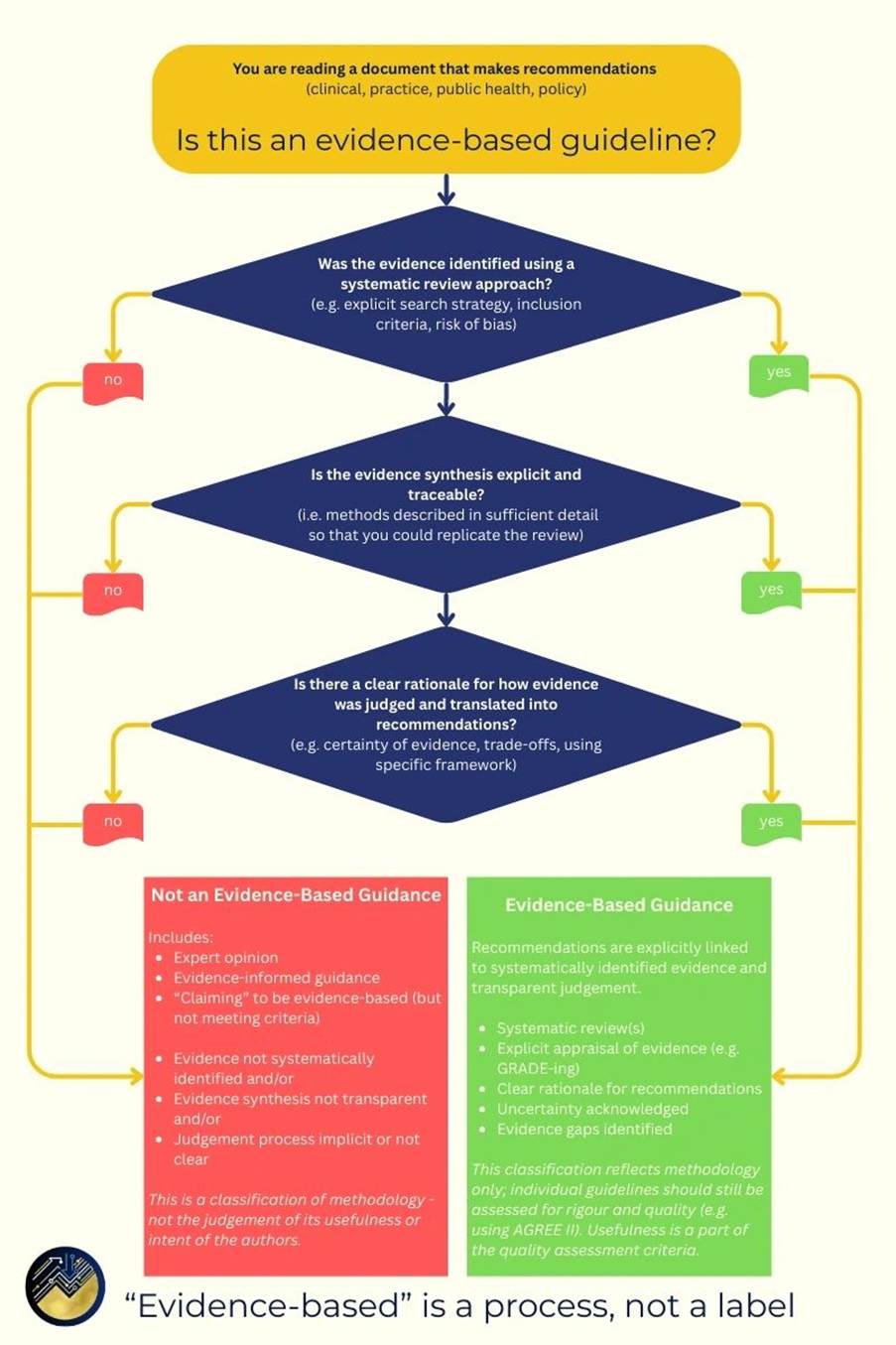
This simplified diagram helps you quickly judge whether a document is evidence-based. Even if it is, not all guidelines are created equal — quality, transparency, and reliability still need checking. Even if you don’t use AGREE II, this diagram provides a quick first impression — but treat it as a starting point, not a final verdict.
The gold standard for evaluating guideline quality is the AGREE II tool, which looks at whether:
- The guideline is created for the right population, addresses the right questions, and does what it sets out to achieve.
- People with a range of expertise, including representatives of the target population, were involved.
- Systematic reviews were conducted using a clear, established process, the method for turning evidence into recommendations is transparent, and the guideline was peer-reviewed before publication.
- Recommendations are easy to find, clear, and, if there are multiple options, these are clearly explained.
- The guideline supports implementation, for example by providing practical tools or advice.
- It is free from conflicts of interest, including financial or other influences from funders or panel members.
There are many additional aspects to consider, which come with experience in guideline development. The more you understand the process, the more you can spot what is truly important — just as with reading primary research. After all, guidelines are a form of research themselves, underpinned by specific epistemic principles and structured frameworks.
In short: evidence-based isn’t a label to claim — it’s a process to follow.
This blog entry is a companion piece to my post on the importance of the evidence based-guidelines.