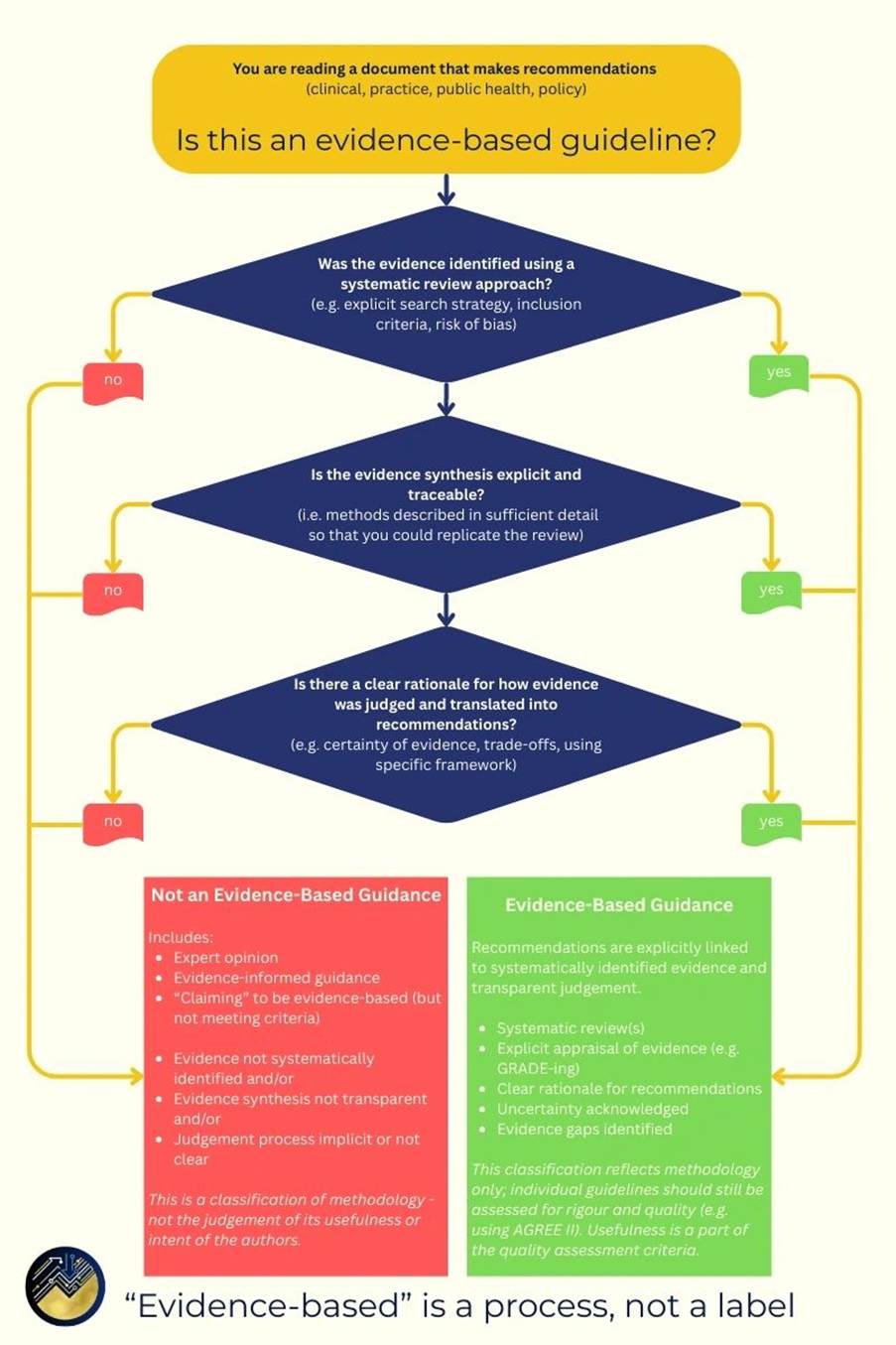
First published 21 January 2026
I am not a clinician but a guideline methodology expert; you can read my full disclaimer here.
In my previous post, I mentioned the Cochrane logo and why it matters: evidence needs to be systematically collected, appraised, and synthesised for experts to see the full picture. One of my own experiences as a systematic reviewer and guideline methodologist involved the development of norovirus guidelines, and it perfectly illustrates this point.
Norovirus is highly contagious. Symptom onset is sudden, infected individuals shed vast quantities of virus particles, and these particles can linger in the air and on surfaces. Alcohol hand gel doesn’t work well against it; only thorough washing with soap and water removes the virus from hands. Norovirus also survives in the environment for a long time, enduring freezing and very hot temperatures.
Because of this, norovirus outbreaks can cause chaos in crowded settings: cruise ships, hospitals, nurseries, and nursing homes. Cleaning, therefore, becomes a critical intervention.
For years, guidelines recommended only hypochlorite (chlorine bleach) as an environmental disinfectant, believed to be the sole effective agent against norovirus. But hypochlorite has serious drawbacks. Even at the standard 0.1% concentration used in clinical settings, it can damage surfaces and equipment, is unsuitable for fabrics or soft furnishings, and can cause health issues for staff and patients. Naturally, the guideline panel was keen to identify any alternatives.
We included over 50 studies in our evidence review. Most were very low quality, with only one prospective cohort and one cross-sectional study on clinical effectiveness. The rest were laboratory studies or outbreak reports, right at the bottom of the hierarchy of the evidence. Despite the very weak evidence base, one clear theme emerged: alternatives to hypochlorite, such as quaternary ammonium compounds, alcohols, and aldehydes, were generally ineffective at deactivating norovirus. And, if something fails under controlled laboratory conditions, it’s unlikely to perform better in real-world settings – so we can assume that none of these are beneficial.
Here’s the twist that surprised everyone: hypochlorite itself didn’t perform as well as expected. The long-trusted “gold standard” wasn’t consistently effective. Clinical studies showed inconsistent effects on norovirus outbreak duration and spread. Laboratory studies were slightly more optimistic but highlighted serious limitations: organic matter reduces effectiveness, porous surfaces like fabrics are harder to disinfect, and mechanical removal of the virus is still necessary even when hypochlorite is used. The guideline group concluded that while hypochlorite is probably better than no disinfection at all, its effectiveness against norovirus is still not firmly established. Users also need to follow concentration and contact time recommendations to make sure it is effective. And they need to understand that complete eradication may not be achieved.
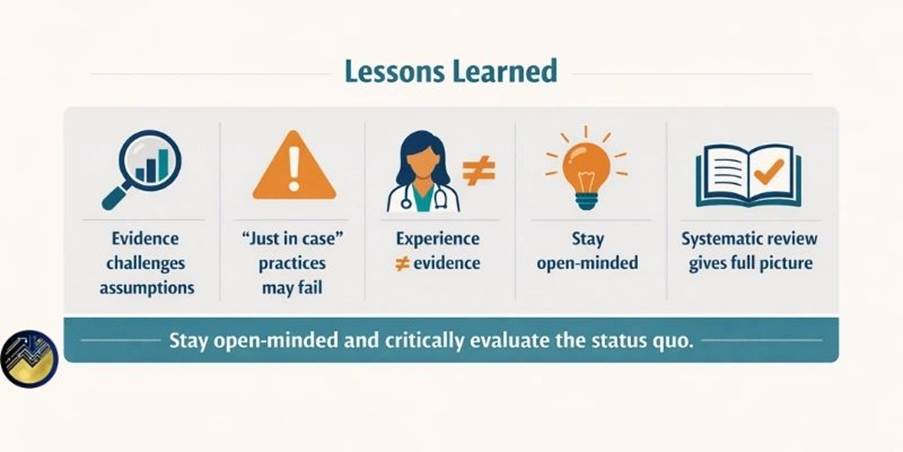
Lessons Learned
This review reinforced a critical point: evidence-based guidelines can reveal surprises that clinical experience alone cannot. Experts’ beliefs, shaped by years of practice, are valuable—but they don’t always reflect the underlying evidence.
This is exactly why systematic evidence synthesis, such as Cochrane reviews, is so important. Only by rigorously collecting, appraising, and synthesising all available evidence can we give experts the full picture—sometimes challenging long-held assumptions and established practice.
Established practices that lack strong evidence should be scrutinized. Many interventions are done “just in case,” but they may be ineffective, unnecessary, or even unsafe. Systematic review allows us to challenge the status quo, highlight uncertainties, and ensure that recommendations are based on evidence, not habit.
The key takeaway: open-mindedness and rigorous evidence review are essential. What we think works may not—and discovering this is precisely why guidelines exist.
This blog entry is a companion piece to my post on the importance of the evidence based-guidelines.